In France, registration for sports activities is often accompanied by the necessity of providing a medical certificate. While this requirement initially aims to ensure the safety of participants, its obligation has been questioned in several disciplines, including Pilates. A true wellness phenomenon, Pilates attracts a wide audience, ranging from seasoned athletes to individuals seeking relaxation and gentle muscle strengthening. For those who wish to register without going through a doctor, alternatives to this certificate are multiplying, addressing both practical issues and a desire for administrative simplification. But what are these alternatives, and how can they truly replace the traditional medical certificate?
Legal exemptions: a relaxed framework
Regulations have transformed in recent years, adapting to new sports realities and the expectations of practitioners. Indeed, certain activities deemed to have low risks now allow for a waiver of the medical certificate under certain conditions.
In 2017, a legislative amendment introduced the notion of a medical certificate valid for three years for certain activities. This measure applies when the practitioner has regularly provided a certificate and has not changed disciplines. Pilates, considered a low-impact activity, can often benefit from this provision.
Self-assessment of health status is also encouraged. Health questionnaires, provided by clubs, allow participants to evaluate their own ability to practice without having to resort to a systematic medical opinion.
The opinion of health professionals: a consultative role
Health professionals, although still often consulted for medical certificates, play an increasingly consultative role in the context of registrations for Pilates classes.
- The primary care physician can provide a general opinion on the ability to engage in physical activity, but this opinion often relies on general health criteria rather than specific expertise in Pilates.
- Physical therapists, familiar with the movements and benefits of Pilates, become valuable interlocutors for assessing the relevance of this practice for different profiles of practitioners.
For particular cases, such as individuals with medical histories, a certificate may still be required. However, for the general public, the advice of professionals leans more towards personalized guidance, allowing for a tailored approach to health and sport.
The importance of supervision: safety first
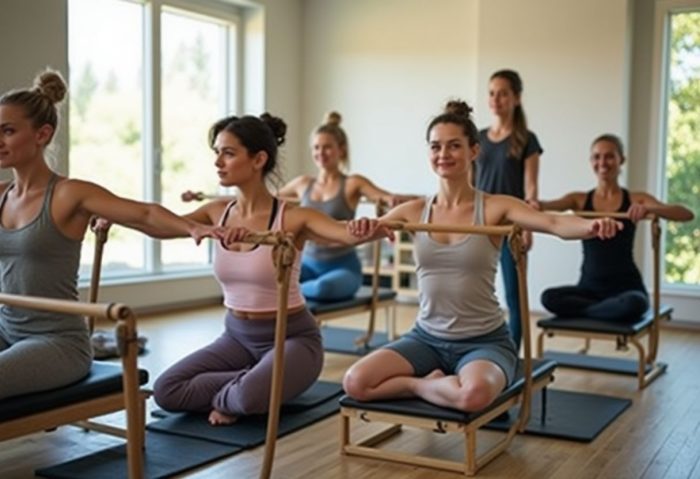
In Pilates classes, supervision plays a fundamental role. Instructors, beyond their pedagogical role, are trained to recognize signs of fatigue or discomfort in participants, which remains a significant safety guarantee.
Organizations, whether clubs or associations, are increasingly investing in the ongoing training of their instructors. This includes regular training on Pilates techniques, as well as on group management and risk prevention.
This vigilance in supervision partially compensates for the absence of a medical certificate by ensuring that exercises are adapted to the actual capabilities of participants. Classes studio poses, for example, can be adapted to ensure they are suitable for all fitness levels and to prevent injuries.
The choice of practitioners: a preference for flexibility
The Pilates audience, often composed of individuals seeking flexibility and well-being, generally welcomes the simplification of administrative procedures.
The possibility of registering without a medical certificate is perceived as an advantage, allowing for a more spontaneous and less burdensome practice.
- Simplification contributes to a democratization of access to classes, particularly for those who hesitate to consult a doctor for a simple certificate.
- It promotes a more responsible and autonomous approach, where everyone is an actor in their health and well-being.
Testimonials from practitioners reveal satisfaction regarding this regained autonomy, while emphasizing the importance of remaining vigilant and attentive to one’s body.
The question of the medical certificate for practicing Pilates reflects an evolution in mindsets, where safety and well-being align with administrative simplification. Alternatives to the medical certificate, whether legal, supervised by professionals, or based on self-assessment, offer a modernized approach adapted to the diversity of practitioners. Staying informed and vigilant remains essential, as beyond formalities, the priority is still the well-being and safety of everyone.