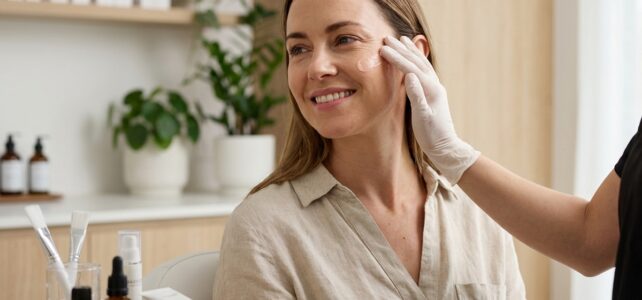
Bioactive peptide injections are reshuffling the deck: for the first time, they are surpassing traditional fillers and toxins, according to the figures just published by the International Society of Aesthetic Plastic Surgery for 2025. Teleconsultation platforms continue their rise, bringing a new breath to the prescription of personalized care, while invasive procedures are declining, often quite sharply.
Never has the distinction been so clear between the desire for a natural look and the search for instant results. In this changing landscape, aesthetic medicine is adapting: technology refines advice, protocols become precise, and each intervention is thoughtfully designed, never trivialized.
What shapes beauty desires in 2026?
The era of blindly duplicating foreign trends is fading. In France, habits are changing. Technological innovation and the notion of sustainability are becoming essential even in everyday choices. From Paris to Annecy, the new generation prefers to limit products and aim for coherence. One word takes center stage: skinimalism. This minimalist routine, recommended by dermatologists and omnipresent on social media, reduces actions to the essentials for healthy skin that doesn’t need to overdo it. Authenticity is sought, far from overly smooth finishes or homogenized skin.
That said, Gen Z maintains its attraction for more sophisticated rituals in the K-beauty style, but in France, the dominant trend remains towards simplification. Hybrid products are multiplying, combining their effects to streamline routines. A few concrete examples illustrate this evolution:
- tinted creams formulated with integrated SPF;
- multifunctional treatments capable of hydrating, treating, and protecting in one go.
Exosomes, new cellular extracts known for their regenerative properties, are gradually being integrated into urban institutes from Paris to Rennes. In response to the demand for visible results on the first signs of aging, these active ingredients are finding their place in targeted protocols.
Digital diagnostics are making their way into routines earlier than ever. Algorithms and AI act as scouts: they decode, anticipate, and personalize care plans. Now, selecting a product is no longer approximate. Laser hair removal in Rennes is also part of this movement, promoting transparency, reliability, and eco-responsible approaches. Priorities are shifting: skin health takes precedence, technology becomes a discreet partner, and sustainable commitment draws the line. Mobile payments, 5G, mobility—the beauty sector is adopting these innovations and charting a new course.
Focus on the aesthetic treatments that are truly appealing this year
In Parisian clinics, the appeal of non-invasive treatments is growing. The excesses of surgery are fading in favor of gentle technologies, HIFU ultrasound, radiofrequency, microneedling, which sculpt, densify, and smooth without freezing features or marking time. The aim is subtle correction, toned skin, a radiant face, while preserving expressions and individuality.
Injections are evolving as well. Hyaluronic acid and botulinum toxin are now dosed to the milliliter, adopting the “baby botox technique”: just enough to erase fine lines and reveal radiance, without altering facial mobility. Skinboosters provide intense hydration, while biostimulation solutions boost collagen through polynucleotides or calcium hydroxyapatite, to redensify and rejuvenate the skin’s natural texture.
The technological wave is also penetrating the intimacy of home routines. LED masks are appearing in bathrooms, as are connected sensors that measure skin condition between appointments. On the hair side, anti-hair loss treatments go beyond mere promises to offer real improvements, also supported by innovation, for results that are tailored, realistic, and long-lasting.
Choosing the right treatment: how to find the best answer to your expectations?
Today, selecting the treatment that perfectly fits one’s needs requires navigating between cutting-edge innovations and attentive self-listening. Digital diagnostics are revolutionizing the usual process: AI collects, analyzes, compares, and each protocol evolves according to the individual. Gone are universal recommendations; it’s all about customization driven by data and monitoring.
Those who have adopted skinimalism rely on the doctor/patient duo: fewer products, chosen carefully, spaced but relevant actions. One sticks to a cream, a serum, sometimes a multifunctional sunscreen, each step aimed at prolonging skin health without overloading it. Online or in-clinic diagnostics complement the approach and prevent poor choices.
Artificial intelligence never sidelines the professional: it enriches their analysis, cross-references personal and medical data, and refines selection. Personalization definitively takes precedence, technology blends into individuality, and the quest for naturalness becomes a shared goal. Experts repeat: stay attuned to your skin, dose your actions, and refuse the multiplication of unnecessary protocols. Now more than ever, effectiveness and simplicity guide routines.
2026 is undeniably shaping up to be a passing of the torch: beauty no longer fits into a mold; it embraces what distinguishes each person. The true privilege? To give oneself the chance to evolve, without ever erasing what makes us unique.