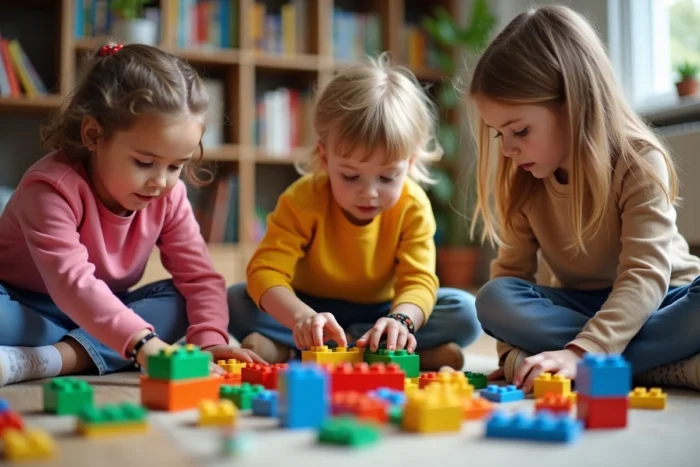
A number never lies: 93% of children aged 7 to 12 juggle multiple activities each week, and not just in front of a screen. Contrary to what some alarmist discourses suggest, passion has not dissolved in the digital age. Interests abound, reinvent themselves, and intertwine. Today’s children have not deserted sports fields, nor have they stored away paintbrushes or microscopes in the attic. In reality, their curiosity is expressed on all fronts, as long as we know how to recognize and encourage it.
The increase in connected activities has not quenched the thirst for varied experiences among the youngest. On the contrary: as the time spent online rises, creative workshops, sports training, and scientific discoveries remain steady, even progressing, according to recent studies.
This coexistence between digital leisure and traditional activities raises new questions for parents. How to support without stifling? Where to draw the line between guidance and autonomy? One certainty, shared by specialists: the attention and encouragement given at home are crucial for awakening curiosity and the desire to learn.
What passions drive children today?
The image of children glued to their screens has long since faded. In reality, they explore worlds of unexpected richness. Sports, arts, sciences, board games, or nature: each domain becomes a field of adventure. Soccer or basketball forge friendships, dance sharpens the sense of rhythm and coordination, music reveals temperaments, and scientific experimentation hones observation and reasoning.
Nature is not to be overlooked. Between makeshift huts and rock collections, the taste for exploration is exercised outdoors. Observing an anthill, recognizing trees, or following animal tracks are all opportunities to nurture curiosity and a connection to the living world. Some children are enthusiastic about dinosaurs, others gaze at the stars or dream of inventing the next great discovery.
Building or board games, just like home experiments, encourage autonomy and critical thinking. Manipulating, trying, sometimes failing, often starting over—these are the first steps toward self-confidence and a free spirit.
Supporting these impulses is mainly about keeping the door open to initiative. Parlons Enfance’s advice emphasizes the importance of a nurturing environment where the child can explore, fail without fear, and start over infinitely. It is in this space, and not in the demand for success, that a personal passion can flourish.
How to recognize and nurture your child’s curiosity in everyday life
To see a true love of learning emerge, one must first know how to observe. The role of parents sometimes resembles that of a patient gardener: being present, attentive, and open. The child suddenly comes alive in front of a book, invents a game, assembles an improbable object, asks a stream of questions… These moments of losing track of time, where they immerse themselves in an activity, are precious signals.
The environment plays a central role here. A flexible space, accessible materials, books lying around on the table, tools suited to their hands: all of this fosters exploration. Mistakes are not failures but the fuel for authentic discovery. Providing the opportunity to test, fail, and start over is where confidence takes root and grows.
It is less about prescribing a program than about offering pathways. Initiating a discussion after an experience, valuing the joy of searching, encouraging questions: this is how autonomy is built, and the child learns to think for themselves. A stimulating environment allows for the development of critical thinking and freedom while discovering their own resources along the way.
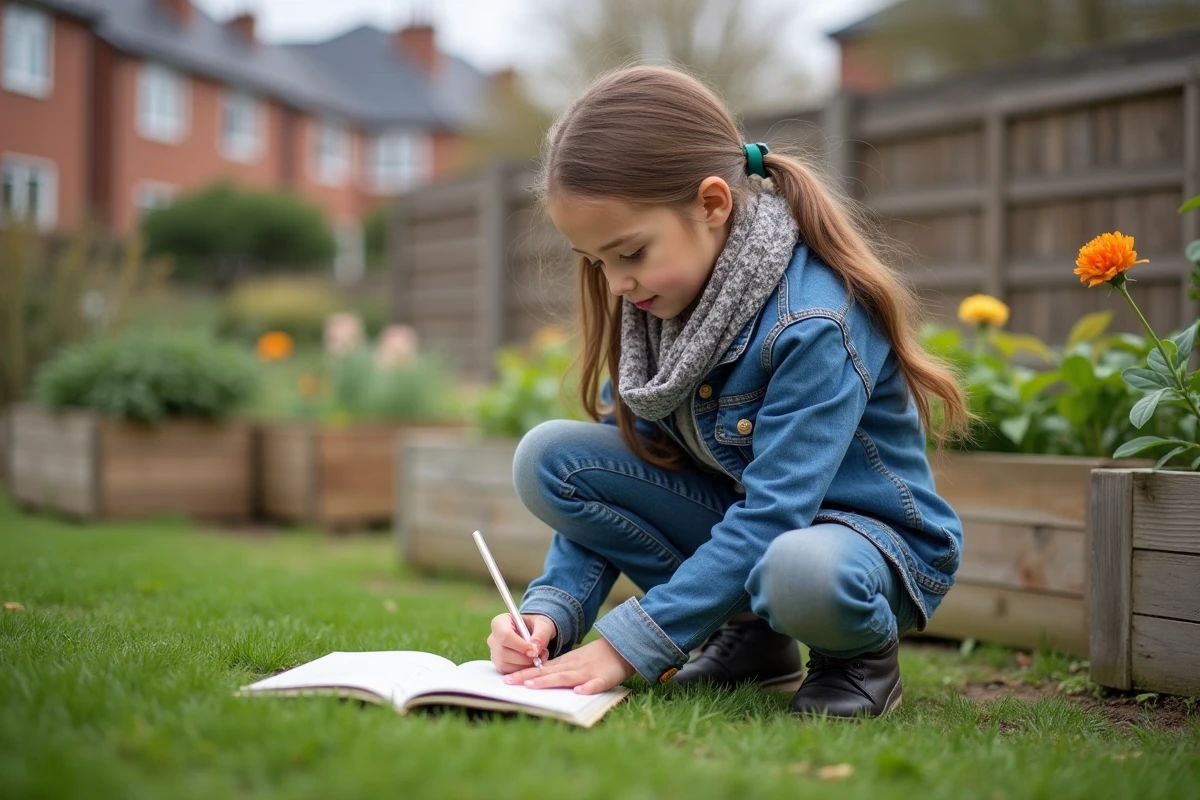
Concrete ideas to share and encourage their hobbies together
Supporting a child’s passion often begins in shared daily life. When parents and children come together around a project, trust is established. Allowing the child to choose the theme and then accompanying them in its realization is already a lot. Here are some ideas to try as a family:
- Organize a science-themed treasure hunt together, create objects from recycled materials, or make a collaborative artwork, turning the home into a true experimentation laboratory.
The family setting then transforms into a space for trials, exchanges, and mutual transmissions.
Diversifying the resources also helps to broaden horizons. Here’s how to vary approaches to support curiosity:
- Offer books, podcasts, videos, educational games, or hands-on experiments: each resource opens a different door to the world of passions.
- Give the child the opportunity to explain, present, or showcase their discoveries: this sharing values their voice, strengthens their confidence, and stimulates collective curiosity.
The environment has a say: keep books and materials within reach, create a cozy corner for reading or crafting, and suggest outings that resonate with their interests, such as museums, workshops, or meetings with passionate professionals. Let them take initiatives, sometimes diverging from your expectations, then come back to share what they experienced.
Accompanying also means knowing when to step back. Support attempts, mistakes, and explorations. Provide suitable resources, then let the child take ownership of the journey. Finding the right balance between support and freedom is what nourishes deep motivation and the joy of learning together.
In the wake of this encouraged curiosity, passions grow, transform, and sometimes fade only to be reborn. But every seed sown today already outlines an unexpected path toward tomorrow.