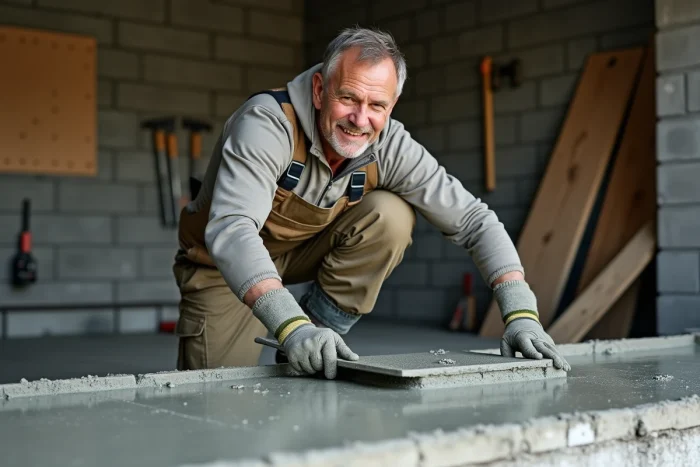
Freshly poured concrete on an old substrate never promises perfect adhesion, even when the surface appears flawless. Invisible microcracks and uneven porosity complicate the merging of the two layers, exposing the site to risks of cracking or detachment. However, experienced professionals sometimes prefer to reinforce and correct rather than demolish everything. A meticulous, targeted job is often enough to erase defects without resorting to mass and jackhammers.
The choice of method depends on the condition of the existing slab, future use, and the extent of corrections to be considered. There are concrete solutions to prepare old concrete, correct a false level, or solidify the whole without necessarily starting from scratch.
Old concrete slab: what to know before getting started
Before putting on your boots and taking out the concrete mixer, it is essential to assess the condition of the existing slab. A serious diagnosis is required: scrutinize the cracks, test stability underfoot, check for waterproofing. Sometimes, only an expert eye can uncover invisible flaws, assess the support’s strength, or guide towards suitable solutions, such as specific additives.
Preparation is key. The slab must be cleared of anything that hinders adhesion: grease, paint stains, dust, laitance. A rough and slightly damp surface promotes the bonding of the new concrete. The application of a bonding agent, whether it is an epoxy resin, a primer, or a sealing mortar, maximizes the junction between the two layers.
The rules of the trade impose their logic to ensure a durable slab. Depending on local regulations, certain constraints may apply: minimum thickness, specific reinforcements… The final use, whether garage, terrace, or passage area, determines the thickness to be anticipated and the necessity of a mesh or appropriate reinforcement.
Ready-mixed concrete simplifies targeted repairs and guarantees a homogeneous mix, with no surprises during drying. For a detailed step-by-step approach, the page ‘how to pour a concrete slab on an existing slab’ details every possible configuration with practical advice and proven techniques. Understanding the initial condition is the first step, well before thinking about pouring even a liter of concrete.
How to correct a false level or defects on an existing slab?
To achieve a flat and reliable surface, you must start with a meticulous inspection. A mason’s rule and a spirit level are enough to spot bumps, hollows, or undesirable slopes. This identification conditions the entire sequence of operations.
Before tackling repairs, preparation is essential: the slab must be clean, free of grease or paint residues. If necessary, a stripping product will tackle stubborn stains. To ensure adhesion, nothing beats a good roughness achieved through sanding or shot blasting.
Here are the main products and tools to consider for correcting a false level or defects on existing concrete:
- Sealing mortar or epoxy resin to fill, depending on the depth of the defect;
- Trowel to fill cracks and level deformed areas;
- Float to achieve a perfect finish on the surface;
- Mason’s rule for large surfaces, to spread the mortar and achieve a perfect level.
Lightly moistening the substrate, without excess, improves the adhesion of the mortar. Always respect the recommended drying times, or you risk new issues arising. A regular substrate conditions the success of pouring a new slab over the old concrete and limits unpleasant surprises in the future.
Reinforcing and pouring a new slab without breaking everything: methods and tips that work
To lay new concrete on an existing slab, the strength of the formwork makes all the difference. Positioned and secured to the millimeter, it holds the fresh concrete and defines the final geometry. The installation of a polyethylene film or geotextile effectively protects against rising moisture, a detail that can change everything in the long run.
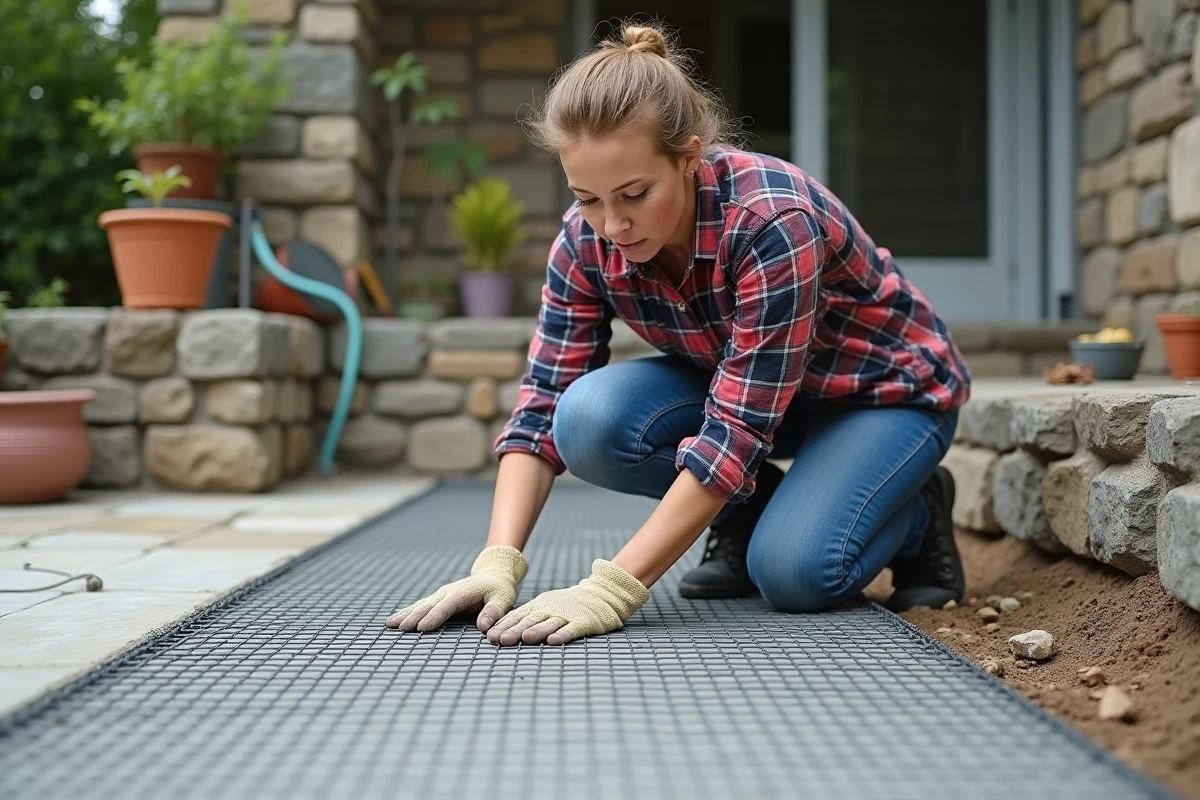
Metal reinforcement should not be overlooked. A mesh or reinforcements placed wisely limit the risk of cracking and enhance the future slab’s strength, especially under significant loads or marked temperature variations. To absorb movements and prevent unsightly cracks, integrating expansion joints remains the best defense.
Modern techniques have transformed practices. Incorporating fibers (glass, carbon, polypropylene), microsilica, or fly ash into the concrete boosts strength and longevity. Applying a sealing agent on the surface during curing protects the fresh concrete and improves the final quality, a step often underestimated.
The pouring of concrete adapts to the size of the site: wheelbarrow, concrete mixer, or truck mixer, each has its solution. And if innovation tempts you, 3D concrete printing or nanomaterials open the door to precise and environmentally responsible repairs. Concrete is evolving, techniques are too, and this promises a result that stands the test of time without turning the site into a field of ruins.