
Taking out car insurance online with no upfront payment means choosing a policy where no amount is charged when you sign up. This can be appealing when money is tight or when you need cover quickly after changing vehicles. But this option relies on specific payment arrangements, and there are a few pitfalls to watch out for before accepting a quote.
Deferred payment and car insurance: what “no upfront payment” really means
When an insurer offers a policy with no upfront payment, it postpones the first direct debit until a few weeks after the policy start date. You are covered immediately, but you pay nothing on the day you sign up.
This arrangement does not eliminate the premium. It simply spreads it differently. Monthly or quarterly payments just start later. The total annual cost may be the same or slightly higher than paying in full, depending on the policy terms.
Have you noticed that the same insurer sometimes quotes two different prices depending on the payment method? Paying annually is often cheaper than spreading payments monthly. If you choose a no-upfront-payment option with monthly direct debits, check whether instalment fees apply. Compare the total amount due over twelve months, not just the monthly payment.
To explore the offers available with this type of payment option, you can browse online car insurance on Assurance Rapide and compare the terms of each policy.
Suspension of cover and missed payments: the real risk of deferred payment
One point that quick sign-up pages don’t highlight: a missed payment can lead to your cover being suspended. Article L. 113-3 of the French Insurance Code sets out a clear procedure. After sending a formal notice, the insurer can suspend cover within thirty days and then cancel the policy.
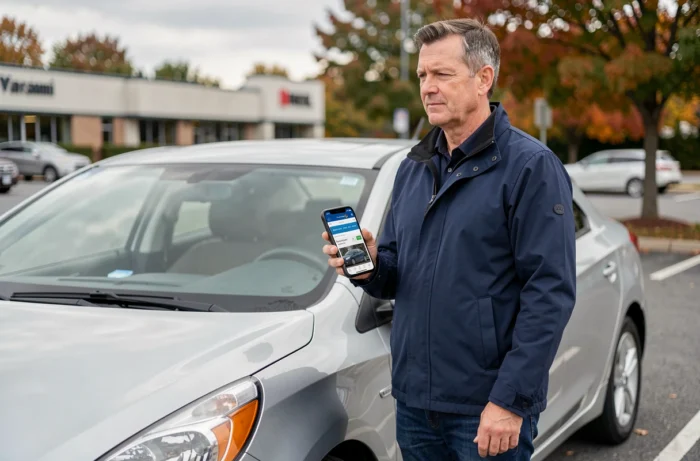
The Insurance Ombudsman points out that making a payment after cancellation does not automatically reinstate the policy. In other words, driving without active cover can result in a fine and leave you with no compensation at all if you have an accident.
With a no-upfront-payment policy, the first direct debit may come at a time when you’ve forgotten about it. Check the exact date of the first payment in the policy schedule, and make sure there will be enough money in the linked bank account.
Online car insurance: what to compare when looking at no-upfront-payment offers
Why do some quotes look attractive but disappoint in practice? Because the advertised price doesn’t tell the whole story. Here’s what to check before taking out a policy:
- The level of cover included in the policy. Third-party insurance covers civil liability, but not theft or glass breakage. If your vehicle is valuable, a mid-level or comprehensive policy may be more suitable, even with no upfront payment.
- The excess for each claim. A high excess lowers your monthly premium but increases what you pay out of pocket if you have an accident. Compare the excess amounts for two similarly priced offers.
- Annual administration or management fees. Some online insurers waive setup fees but charge recurring management fees. Add up all the fees to find the true cost of your policy.
- Cancellation terms. Under the Hamon Law, any car insurance policy can be cancelled at any time after one year. Check that the insurer doesn’t make the process difficult with unusual deadlines or procedures.
Proof of insurance and immediate cover: what has changed
Since 1 April 2024, the green card and insurance disc are no longer required for vehicles registered in France. Law enforcement officers now check cover using the Insured Vehicle Register (FVA).
This change has made a difference to online sign-ups. Your policy is active as soon as the insurer registers your details in the FVA. You no longer have to wait for a physical document to arrive before driving legally.
One caveat: it can take a few hours, and sometimes one or two days, for the register to be updated. During this time, the Insured Vehicle Memo provided when you take out the policy serves as temporary proof of cover. If you sign up on a Friday evening, keep this document handy over the weekend.
Driver profile and no-upfront-payment premiums: the factors that matter
The price of car insurance with no upfront payment depends on the same factors as any other car insurance policy. Your driver profile plays a key role.
- Your bonus-malus coefficient: drivers with several claim-free years receive a significant discount. A high malus increases the premium, and some insurers may then refuse to offer a no-upfront-payment option.
- How long you’ve held your licence: young drivers pay a surcharge. Being able to take out a policy with no upfront payment can make it easier to get your first insurance policy, but the annual premium will still be higher.
- Your vehicle and how you use it: annual mileage, where it is parked and your location. A vehicle parked in an urban area costs more to insure than one kept in a garage in a rural area.
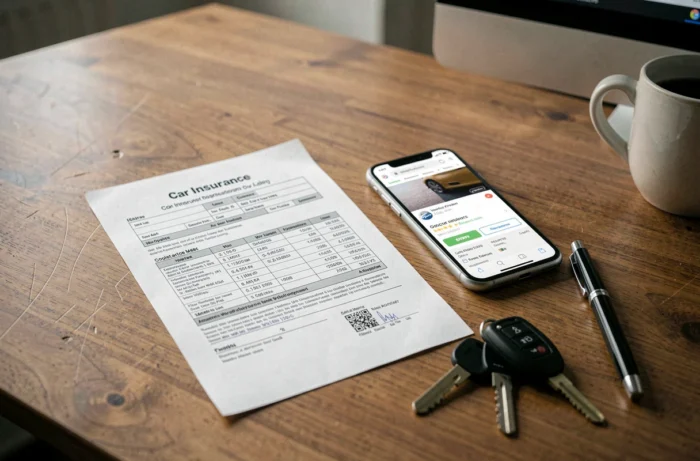
Getting several quotes at the same time is still the most reliable approach. Enter the same details on three or four websites, then note the total annual premium (not the monthly payment), excesses and cover. In ten minutes, you can see the real difference between the offers.
A no-upfront-payment option changes neither the cover nor the obligations under the policy. It only adjusts the payment schedule. Keep this in mind: the overall annual cost and level of cover determine whether a policy is right for you, not whether you have to make an initial payment.